Friday, 20 November 2009

Tip # 21: Important considerations during the location scout

By Sinéad Ferguson (Producer/Production designer)

This is part seven in a seven part series on finding the right locations.

When looking for a location put the word out, email friends, family, post on film forums. Use the internet, it’s an invaluable research tool. Keep your eyes open at all times. I find I do it instinctively and now have a mental catalogue of lots of interesting potential filming locations all over Brighton that are filed away should we ever need them.

Once you find it, here are some important things to keep in mind:

1. Where possible have all the necessary people with you, producer, director, DOP, production designer. Everyone will be looking for different attributes in a location. Incorporate a proper recce at the same time. Ultimately it saves time and making unnecessary trips back and forth and you can all immediately discount or agree on the potential of a location. Also bring the right equipment with you, either a camera or camcorder, a note book for those important notes, a tape measure and a light meter.
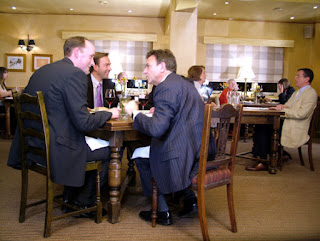
Inside The Rainbow Inn, restaurant shoot.

2. You also need to find the balance between the aesthetic and the practical. The place may look great but will there be enough room for all your equipment? Parking for your cast and crew? What facilities are available? Will it be too difficult to light? What are the sound conditions? What are the power sources and are you able to tap into it? Are there separate circuits capable of handling your lighting? You want to avoid having to use a generator, it’s costly and a nightmare for sound.

3. On exterior shoots make sure there are facilities available for your cast and crew. We shot in Alfriston on two freezing cold days in November so had to organise somewhere to do wardrobe changes, use a toilet if necessary and stay warm when not shooting. Fortunately The Smugglers Inn was kind enough to allow us to use their premises.

The kitchen shoot in the Master Mariner,
Brighton Marina.


4. You must also take into account the distance between locations. Obviously when scheduling your shoot you will always aim to shoot in one location a day but there may be some days where it is unavoidable and you have to move from one to another. This time spent packing up and moving long distances from A to B to set up again, is valuable time lost when you could be shooting your film.

5. Finally when filming it goes without saying that Public Liability Insurance is essential and when securing locations this is a must. It is also an added reassurance to the proprietor that should anything go wrong he or she won’t be left out of pocket or liable for damages. When negotiating a location another good bargaining tool in your arsenal is offering a credit in your film and publicity for their business when and where possible.

The council shoot, Litlington Village Hall.

Tuesday, 10 November 2009

Tip # 20: How to get permission to use a location

By Sinéad Ferguson (Producer/Production designer)

This is part six in a seven part series on finding the right locations.

Here comes the difficult part, finally finding your locations is one thing, getting permission to use them is another thing entirely and isn’t always particularly easy. In securing a location no matter how small and incidental, never underestimate how important it is to be sincere, enthusiastic and passionate about your film. It’s contagious and can often be the tipping point. It can be the difference between getting that important location or losing it. The genuine and friendly approach has yet to fail me. Be upfront, clear and honest when you approach the owner and tell them exactly just what filming on their premises will entail.

(Photo above left: Lead actor Jos Lawton on location
during the kitchen shoot at the Master Mariner,
with the production team consulting behind him.)

Admittedly it’s tempting to gloss over things to get permission, but don’t compromise your integrity and be anything less than truthful and respectful. Give the person the common courtsey of your honesty and allow them to make a well informed decision. Your honesty shows you are trustworthy and in the long run this is important. I formed good relationships especially with our two primary locations in particular Ed at The Rainbow Inn and Asher in The Master Mariner. Truthfully it wasn’t all that difficult as they happen to be very nice guys and I genuinely like them.

Top: The Rainbow Inn manager Luke,
with actress Verity Marshall.
Above: Rainbow Inn manager Ed
observes the crew in action during the night shoot.

Our two main interior locations were working restaurants and pubs. Now convincing someone that it’s a good idea to allow you to bring actors, and a film crew with lots of equipment traipsing in and out of their premises can be a little difficult. Also as they are working restaurants and pubs they are obviously in use all day. Our small budget meant we couldn’t pay to shut them down, meaning that they would also have to be willing to allow us on their premises overnight. Thankfully they did and so all filming that took place in these locations were night shoots. Not ideal to say the least, I know the cast and crew weren’t overjoyed by the prospect and neither were we. However they were all good sports and on a low budget some compromises have to be made to get what you want and this was one of them. Plus Dan, Itsuka and I were confident that the end results on screen would be worth those long and mentally exhausting night shoots.

Master Mariner (Brighton) manager Asher Burman on set
during the kitchen shoot, speaking with director Dan (left).

Wednesday, 4 November 2009

Tip # 19: The unorthodox approach … Finding the flashback locations

By Sinéad Ferguson (Producer/Production designer)
This is part five in a seven part series on finding the right locations.

During the course of making Ambleton Delight we filmed in lots of different places like restaurants, gardens, in alleyways, in the beautiful countryside, car parks, a kitchen, a farm, in the streets, in an apple orchard and so on.

However perhaps one of the more strange or unusual locations we shot in was for one of the flashback scenes. We needed a room that John in a fit of rage could completely trash to pieces and so put the word out. Surprise , surprise..... we didn’t get many willing volunteers.

Then one day we happened to meet some real characters who as it turned out were squatters. We got talking, they were the first squatters we had ever met and I have to say I was fascinated by their stories and this lifestyle they had chosen. So of course, I bombarded them with questions. It soon transpired that they were living in a place other squatters had passed on to them. Apparently that’s what they do and they offered us an empty room to use in the place they were staying.

Above: The room to be trashed.

A little dubious at first eventually curiosity got the better of us so Dan, Itsuka and I checked it out. On first impressions the exterior was very run down and just creepy with boarded up and broken windows, it was like something straight from a horror film. Itsuka and I agreed it would make a perfect" haunted house". This was confirmed when we went inside, it had broken windows, creaky floorboards the lot, weird bits of dolls and children’s toys lying around just added to the eerie vibe and this was during the day. I swear you couldn’t have paid me to stay in that place over night.

Above: The room with props
strategically placed for destruction.


Then the guys showed us the bedroom and it honestly surprised me, someone had gone to the trouble of painting it, there was a bed and some furniture -it was perfect. We left and came back a couple of days later armed with our props and the guys just left us to it. We did our trashing, well Dan and Ben did most of it, and I had a feeling that they had a great time doing it. When all props were destroyed the place was a mess, but of course even in a squat we felt compelled to tidy up after ourselves and in the end, sure we left the place cleaner than we found it. Now admittedly it was perhaps an unorthodox approach to solving our problem, but you do what you have to do and we happily left with the shots we needed.

Above: The aftermath...filming is complete.

Sunday, 25 October 2009

Tip # 18: Seamless locations… Finding the kitchen

By Sinéad Ferguson (Producer/Production designer)

This is part four in a seven part series on finding the right locations.

Right so we had found our restaurant now we needed the kitchen. Considering we used three separate locations in Lewes, Brighton and Alfriston to create “The Amble Inn” (an exterior scene was shot at the Moonrakers in Alfriston) it was vital that all the locations were seamless. Finding a kitchen that would fit and be believable as the kitchen of The Rainbow Inn proved to be immensely difficult. The kitchen at the Rainbow Inn although quite big had incredibly low ceilings and narrow spaces, and the set up meant that unfortunately we couldn’t use it. So we had to find an alternative. We visited kitchen after kitchen and they all were either too large or industrial, too small with the wrong equipment or logistically just impossible to film in.

The kitchens at The Rainbow Inn.

This was the location that had us pulling our hair out, time was running out, and it seemed every kitchen we visited was just one disappointment after another. That is until just as we began to think we had exhausted all our options Dan and I saw the kitchen in The Master Mariner in Brighton. It was perfect -the right size, feel, look and layout and it was almost ideal for filming. When it came to getting permission, we had met Asher the owner before so he knew us. We told him all about our film and what we had set out to achieve, and luckily for us Asher also has a real love for film so was happy to give us permission to use it.

The kitchens at The Master Mariner, as seen in the film.

We had finally caught a break and found our kitchen. I remember at the time we had a hundred and one other things on our plate with pre production and securing our kitchen that day was a much needed bit of success and good news for us.

Vist The Master Mariner, in Brighton Marina:
http://www.the-master-mariner.co.uk/

Asher Burman, manager of the Master Mariner,
films the crew in his kitchen.


Cast and crew filming in the kitchens of The Master Mariner.

Wednesday, 21 October 2009

Tip # 17: Trust your instincts… Finding your key location

By Sinéad Ferguson (Producer/Production designer)

This is part three in a seven part series on finding the right locations.

So now that we had our village, our base so to speak we could start working on everything else. Choosing Alfriston as our Ambleton would colour and influence all our other choices in locations. Such as our restaurant, our general store, Chris’s home and so on. We also wanted where and when possible to have locations that were “two for ones” as in both the interior and exterior of the location were appropriate and fortunately we did just that. This logistically made filming that bit easier saving us time and extra shoots . For us it was imperative that all our locations were seamless and that even though for example Chris’s house was actually in Brighton and The Rainbow Inn, is in Lewes their interiors and exteriors aesthetically had to fit and feel like they were part of and belonged to the village in Alfriston.

Finding our “Amble Inn” was no easy task after a lot of research we had a list of 30 or 40 that on paper at least were maybes. We spent two full days driving around almost all of East Sussex.

Sinéad Ferguson (Production designer) and
Itsuka Yamasaki (writer) during the
location scout at The Rainbow Inn.


On visiting them however they just didn't fit the bill. They were either too small, the decor wasn’t suitable, they would be impossible to film in and the list just went on and on. We finally narrowed it down to two possibilities - one a restaurant in Alfriston itself and the other The Rainbow Inn just outside Lewes. I made up my mind instantly and fell for The Rainbow Inn. From a production designer point of view, in my mind’s eye aesthetically it was exactly what I was looking for. It had character, warmth and charm with its unmatching chairs and great little quirky details. It was traditional but had subtle modern touches here and there. I knew it would look great on screen and I could completely envision and believe John and Kate living and working here.

Sinéad (far left) and Itsuka (far right) taking notes in what
was to become the famous
bar in the film.


I was absolutely convinced that it was perfect and trusted my instincts on this but had to a little bit of persuading. Dan (director) had reservations at first and rightly so, it wasn’t completely open plan as we had initially wanted. Also filming wouldn’t be easy and he had to rethink and work out potential alternatives. Fortunately for us though, he is a little genius and he worked out ways it could be done. Success!

Well no, there was still the small matter of actually getting permission and securing the location...

Visit The Rainbow Inn here... http://www.rainbowsussex.com/

The wonderful Rainbow Inn as seen in the film.

Saturday, 10 October 2009

Tip #16: Local knowledge…. Finding the village of Ambleton

By Sinéad Ferguson (Producer/Production designer)

This is part two in a seven part series on finding the right locations.

With Ambleton Delight, Itsuka wrote a wonderfully rich screenplay creating a little world of her own in a quintessential and idyllic English village. I will be the first to admit that I was apprehensive and more than a little daunted when it came to recreating this village and bringing it both to life and to screen. We spent hours driving all over Sussex but to no avail that is until we visited Alfriston. Dan and Itsuka had visited very briefly once when they were writing the script, so it was always at the back of their minds and when we finally made the trip together I could see why. It was perfect and exactly what we were looking for. To be honest after all the trips we made and time spent there I grew quite fond of Alfriston. It is a beautiful and picturesque little village and by the end of filming I knew most shop owners and so on by name, was chatting away with the locals and found myself giving directions to tourists on more than one occasion.

Cast and crew on the narrow streets of Alfriston village.

I would say that one of the advantages of us being from other countries and not “locals” so to speak is that we still haven’t become blind to our everyday surroundings and it is often this fresh eyed approach that works when scouting locations. A disadvantage though is lack of local knowledge of places. That may seem inconsequential to anyone else but it's gold to a filmmaker. Being aware of this I set about making contact with Jilly a local councillor in Alfriston . Dan and I met her one afternoon in the charming Badgers Tea House in Alfriston, and over coffee we proceeded to grill her on all aspects of the village, the people the places and so on. As luck would have it she happens to be a lovely person who has a background in film herself and we immediately hit it off. In the end she was more helpful then I could have hoped she gave me contacts with the local drama group The Alfriston Players who ended up playing our village councillors. When we said we were still looking for a hall, she suggested the village hall in Littlington as a possibility. This was a God send at the time as it was a location that was proving almost impossible to find So we immediately checked it out and it turned out to be just exactly what we were looking for.

Alfriston village main street became our
Ambleton main street
.

The Alfriston Village Stores became
the Ambleton Village Store.

So in short, when filming in somewhere unfamiliar don’t underestimate the wealth of knowledge locals have, it can prove to be invaluable.

Visit the real Ambleton: http://www.alfriston-village.co.uk/

Dan Parkes (director) and Roger Marshall (camera operator)
filming the village sign (which was digitally changed to the Ambleton sign).


Monday, 5 October 2009

Tip # 15: Locations as characters

By Sinéad Ferguson (Producer/Production designer)

This is part one in a seven part series on finding the right locations.


We always set out to achieve a low budget film with a big budget feel. One way we did this is by immediately dispensing with the usual low budget approach of using minimum locations. Is it cheaper to have minimum locations? Yes. Easier logistically? Most definitely. But it’s visually boring... it’s bland, uninspiring and unimaginative. So if you’re not afraid of a little or in our case as it turned out quite a lot of hard work...the effort is definitely worth it and means that your final results on screen are something everyone can be proud of.

From the get go I always thought of the locations as characters in our film and they were as important and integral in the storytelling as our leads, especially considering their ever present time on screen. I absolutely consider it time and money well spent even if your budget is almost nonexistent like ours. I maintain that whatever your budget no matter how small, put the money on the screen, ie your actors and your locations.

Finding just the right locations can be a daunting task. From my perspective as both producer and production designer I had a very clear vision of what we were looking for. Understanding their importance I wasn’t satisfied with us finding locations that were anything less than perfect for our purposes. Get it right and the locations would subtlety enhance and compliment the storytelling, get it wrong and they would easily distract from and hinder it.

Ultimately finding and securing all our locations, involved countless hours doing research online, followed by innumerable hours spent in the car driving all over Sussex, add to that an almost epic amount of emails, endless phone calls, meetings, negotiating, compromising, and persuading, followed by even more convincing and eventually after all that rigmarole our locations were secured.

Easy peasy !

The next few blogs with give you some practical advice based on our experience with finding and securing locations...

Tuesday, 29 September 2009

Tip #14 : A budget breakdown

By Itsuka Yamasaki (Writer/Producer)

OK in this blog, we're making one of our early budget sheets public. If you are interested, please follow this link to a spreadsheet PDF showing the budget structure. We have also included a pie chart (below) to show how it looks visually.

Since the spreadsheet is already self-explanatory I will not say much in this blog, except to state that for obvious reasons we cannot provide every detail. Also, this is the projected budget prior to filming (circa October 2008), so is what we estimated would cost just over £5,000 in total. In reality, by the end of the production (ie April 2009) we were closer to £6,000, with several departments clearly exceeding the budgeted amount for various reasons that we will likely cover in later blogs.

But, as you can see from the pie chart, the budget was spent primarily on the cast and crew. Three areas people normally spend a lot of money hardly cost anything for us. These are:

1. Catering
2. Equipment
3. Costume & props

As for 1.Catering, don't get us wrong - we did provide food for cast and crew! We just decided to make it ourselves rather than ordering a whole lot of sandwiches. (this will be explained in a later blog). And we could keep the cost down for 2. Equipment as we used what the production company already had. The same goes for 3. Costume & props – we asked the cast to wear their own clothes and used what we had for props.

So our main advise for those considering making a feature is not to aim too high unless you are loaded with money. Don't aim for a 35mm period drama project as your first feature! Aim for a project that is viable using what you already have.

Feel free to use the spreadsheet we have provided as a guide for your own production. And any questions regarding the budget please feel free to make a comment or contact us.

Wednesday, 23 September 2009

Tip # 13 The art of abandoning a script

By Itsuka Yamasaki (Producer/writer)

I have read somewhere that "you never complete a script - you abandon it." And it's so true. Even after completing the film you still feel like making changes. We were aware of weaknesses in the script and that there were things to change. We worked hard on it and until the point we finally "abandoned" the script, it went through several stages of script editing:

1. Production team script editing
Dan and I came up with a version of the script we were happy with, then along with producer Sinéad Ferguson, we laid 50+ index cards each containing scenes/sequences (something very simple like "Paul Fraser visits the bar") down on the floor, roughly dividing them into three acts (pictured to the left above). Then we discussed each scene, if it is really working in the script. We moved some scenes from the first act to the second, got rid of some completely, added some... I would've never imagined that these index cards could come in so handy.

2. It's not only what you know, it's who you know.
Sometimes they say you should only write what you know. However, you can cheat by getting advisors on board. Two key elements we were not familiar with involved the restaurant kitchen environment and the 90's drug culture in London. Neither Dan nor I have worked as a chef and we have never smoked. So we first got a friend of ours, Ben Rohde, involved, who is a writer and was familiar with that culture from his past. He re-wrote the scenes brilliantly, adding very witty Cockney dialogue. Then we had a chef read the script, who gave us some advice regarding the gas stove in the kitchen as mentioned in the script.

Script advisor/writer
Ben Rohde


3. Cut, cut, cut...
The last script editing session was with Tomislav Stefanac , who has worked as a script editor for TV episodes in Croatia. So one evening, Tomislav, Sinéad, Dan and I got together, we read the script aloud, and discussed everything, especially on a mission of cutting it down.

Script supervisor
Tomislav Stefanac


The session was intended to be only for a couple of hours but I remember it went to like a eight hour session. We cut down and improved quite a lot of dialogue.

And so we completed – or abandoned the script.

Sunday, 20 September 2009

Tip # 12 Give your characters the right names

By Itsuka Yamasaki (Writer/Producer)

One of the first things we did as a production team was script editing. The session itself will be explained in a later post but in this particular article I would like to focus on just one thing people seem to overlook: character names.

Even with blockbuster films, sometimes you wonder where on earth the filmmakers came up with some names. I recently watched Babel and there were American children aged about 8-10 called Mike and Debbie. I didn't want to be finicky, but to me they didn't sound like modern kids at all and the names kept bugging me throughout the film.

As a production team we thought carefully about each character's names. Because we are all foreigners (Sinead is Irish, Dan's Kiwi, I'm Japanese) we were extra sensitive. We didn't want them to sound unnatural to an English audience.

Character names should reflect their age, country, social status, while also creative and memorable, but should never distract or confuse the audience unless it's done on purpose (as in a comedy, like the character played by Ben Stiller in Meet the Parents!).

Of course, in reality people do have interesting names. It's very possible that there today exists a young girl called Myrtle or Doreen, or a builder called Rufus or Charles, or brothers Shane and Shaun, or friends surnamed Cod and Chip (this is for real according to a friend of mine) and people called James Bond or Tom Cruise (these people apparently exist too). But in films they will distract the audience from the story and we should avoid by all means.

John Miller
(played by Jos Lawton)


For our central character, the name John Miller is quite nondescript and it fits his social background and age group. And since the name would't help him to stand out in a crowd, he somehow had to prove himself that he was unique. Incidentally it's the same name as the character played by Tom Hanks in Saving Private Ryan (http://www.imdb.com/character/ch0002091/).

If you are interested in this subject. there is a very good article that explores it in more detail: http://www.wordplayer.com/columns/wp09.Name-dropping.html